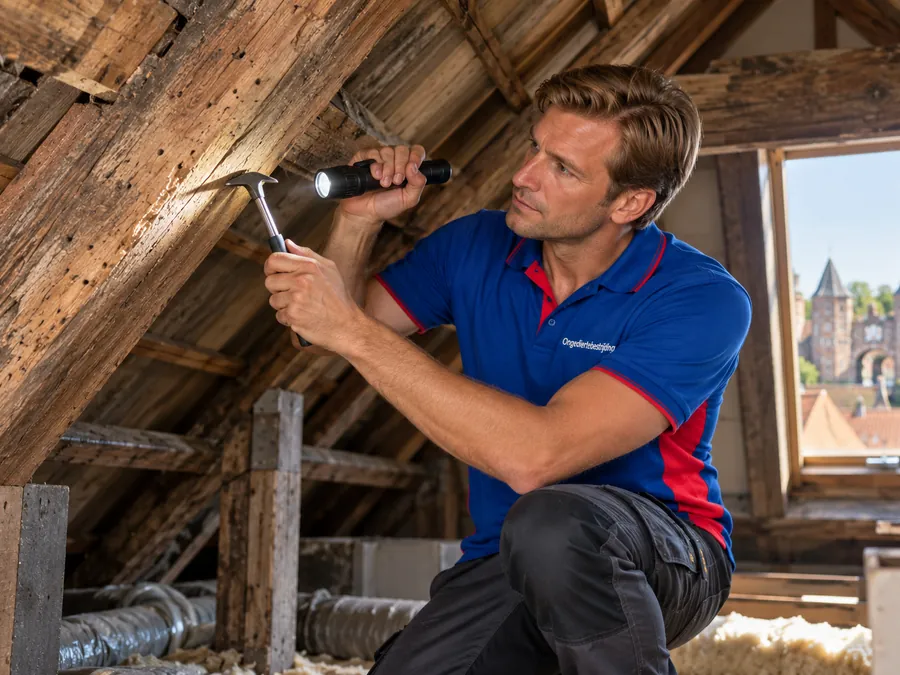
Woodworm treatment in Amersfoort: active or not?
By woodworm most people mean the larva of the common furniture beetle. It lives hidden in the timber for years, eating its way through. Only when the adult beetle emerges does a round exit hole of one to two millimetres appear. Signs that woodworm is still active:
- holes with pale, fresh edges rather than darkened ones
- fine, gritty bore dust (frass) that keeps reappearing beneath the wood
- small brown beetles on the window sill in late spring or summer
- timber that feels soft or crumbles when you press it
Common woodworm, house longhorn and deathwatch beetle
Not all timber damage is the same. The common furniture beetle is often found in floors, stairs, furniture and the sapwood of beams. The house longhorn beetle (huisboktor) is a bigger threat to the structure: its larva is larger, leaves oval holes and eats mainly through softwood in roof timbers and boarding. In a quiet loft you can sometimes hear it gnawing. The deathwatch beetle lives in old oak weakened by damp and fungus, such as beam ends set into a damp wall.
The species determines the approach. A small infestation in a chair calls for something very different from a longhorn in the roof structure.
How our woodworm treatment works
At the inspection we identify the insect, check whether there is still life in the wood and see how far the damage goes. We probe suspicious spots to feel how sound the timber still is. Then comes a treatment that suits the object: structural timber is treated with a product that soaks deep into the wood, injected through small drill holes in thick beams where needed. Loose items can sometimes be treated separately.
If the timber is so damaged that its strength is in doubt, we advise bringing in a building surveyor. We also advise on damp as a cause, because dry wood is far less attractive to woodworm.
What you can do yourself
Don't bring old furniture or reclaimed timber into the house without inspecting it carefully, and don't put it straight next to your own wooden furniture. Keep the loft, crawl space and cellar dry and well ventilated. Avoid sanding or painting over suspicious holes before someone has looked at them, as that removes the evidence telling us whether the beetle is still active.
For beams, floors and roof timbers, treating it yourself is tricky: a brush does not reach larvae deep inside the wood, and a spray from the shop only covers the surface. Hearing mainly rustling in the loft and finding droppings? Then it is more likely a case for mouse control.
Preventing woodworm in old and new homes
Woodworm loves damp wood, so a dry, ventilated crawl space and a loft without leaks are the best protection. After a wet winter, check the beam ends by outside walls and the spots where the gutter sometimes overflows. Varnished or painted wood is less vulnerable, but untreated beams and old pine floors deserve an occasional look with a torch. Planning a renovation? Have it checked first: opened-up floors and ceilings are a good opportunity to spot damage. For other pests in the home, our pest control in Amersfoort can help too.